Bespoke editor at Wallpaper* magazine, Simon Mills, takes us on a fascinating walking tour of SW1 to discover its unique architectural pedigree ahead of London’s new interior and design festival – TRI Design - in March
TRI DESIGN 2026: AN ARCHITECTURAL TOUR OF KNIGHTSBRIDGE


A REGAL STARTING POINT
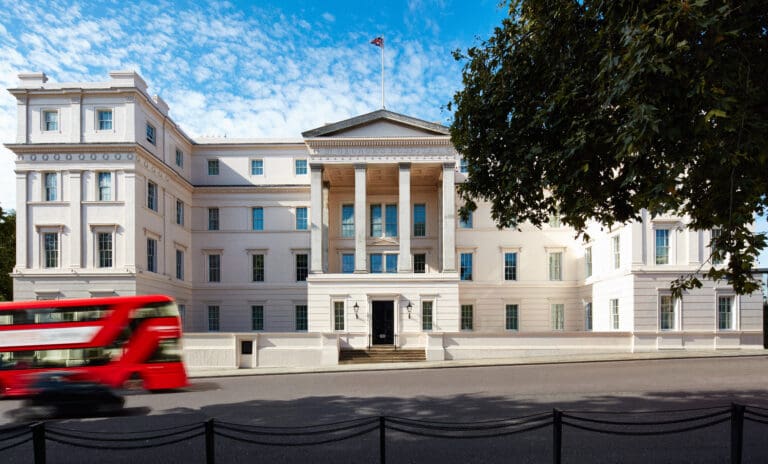
At a leisurely pace, you can walk the Brompton Mile – from The Lanesborough hotel on Hyde Park Corner – in under 20 minutes. It’s worth taking it more slowly, though, because every pavement offers an observation point for extraordinary buildings, a wide array of extravagant architectural styles, a sense of previous centuries revealed, and lifestyles playing out.
Start at The Lanesborough ; its presidential edifice designed by architect William Wilkins (also responsible for the National Gallery just down the road in Trafalgar Square) as a London residence for Viscount Lanesborough, and later used as a hospital. amazing fact; over a century after its conversion for service, St. George’s Hospital closed down making way for what has to be the property scoop of the century. Records showed that back when the former Duke of Westminster sold the building to the state, he had inserted a clause allowing his estate to buy it back at the same price if the building ever ceased to be a hospital. So in 1980 the then current Duke of Westminster duly took up the option to make the purchase at a 19th-century price – just £6,000.
After several major renovations, The Lanesborough’s Neoclassical stylings survive; its Regency entrance now facing Hyde Park. Step inside to discover the hotel’s sumptuous Regency interiors and impressive in-house art collection, and sample the Regency-inspired limited-edition Bridgerton Afternoon Tea. The Lanesborough will also play host to a Walpole Panel Discussion on the future of hospitality design during led by director of Walpole, Charlotte Keesing, on Thursday 12 March.
A MODERN MASTERPIECE
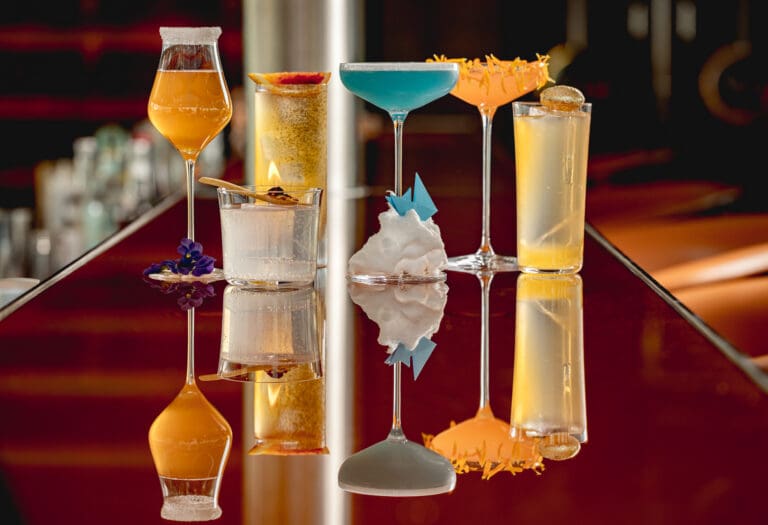
A neighbouring hotel provides immediate aesthetic contrast. The Emory at 33-39 Knightsbridge is a Modernist, suites-and-studios hostelry co-designed by the late, great Richard Rogers and completed by RSHP architects in 2024. A stark-luxe exercise in steel and glass, The Emory’s roof (and panoramic penthouse cocktail bar) houses a series of nautical-looking outriggers which, depending on your vantage point, look like burlesque cats’ ears, J-class yacht masts or the points of a crown. Stop here for a lunchtime or sunset negroni or head downstairs to abc kitchens for a complimentary glass of champagne and a secret seasonal complimentary dish throughout TRI Design. For coffee, SHOT is located just two minutes down the road from The Emory, with elegant black and gold interiors straight from a magazine editorial.
But before your coffee pitstop, take a detour through The Emory’s designer interiors (contemporary, Milanese) and you find yourself, magically, at Wilton Place and the liner-like structure of the Berkeley Hotel, designed by New Zealand architect Brian O’Rorke back in 1972. Before he worked on hotels, O’Rorke had specialised in the maritime discipline, creating interiors for luxury cruise ships and flying boats.
Several decades on from its completion, the Berkeley’s Bath-stone entrance had a spectacular face lift, with Rogers adding a 300sqm long, glazed honeycomb entrance canopy supported by 16 exposed carbon-fibre beams and redesigning the public areas on the ground floor.
A BRUTALIST ICON
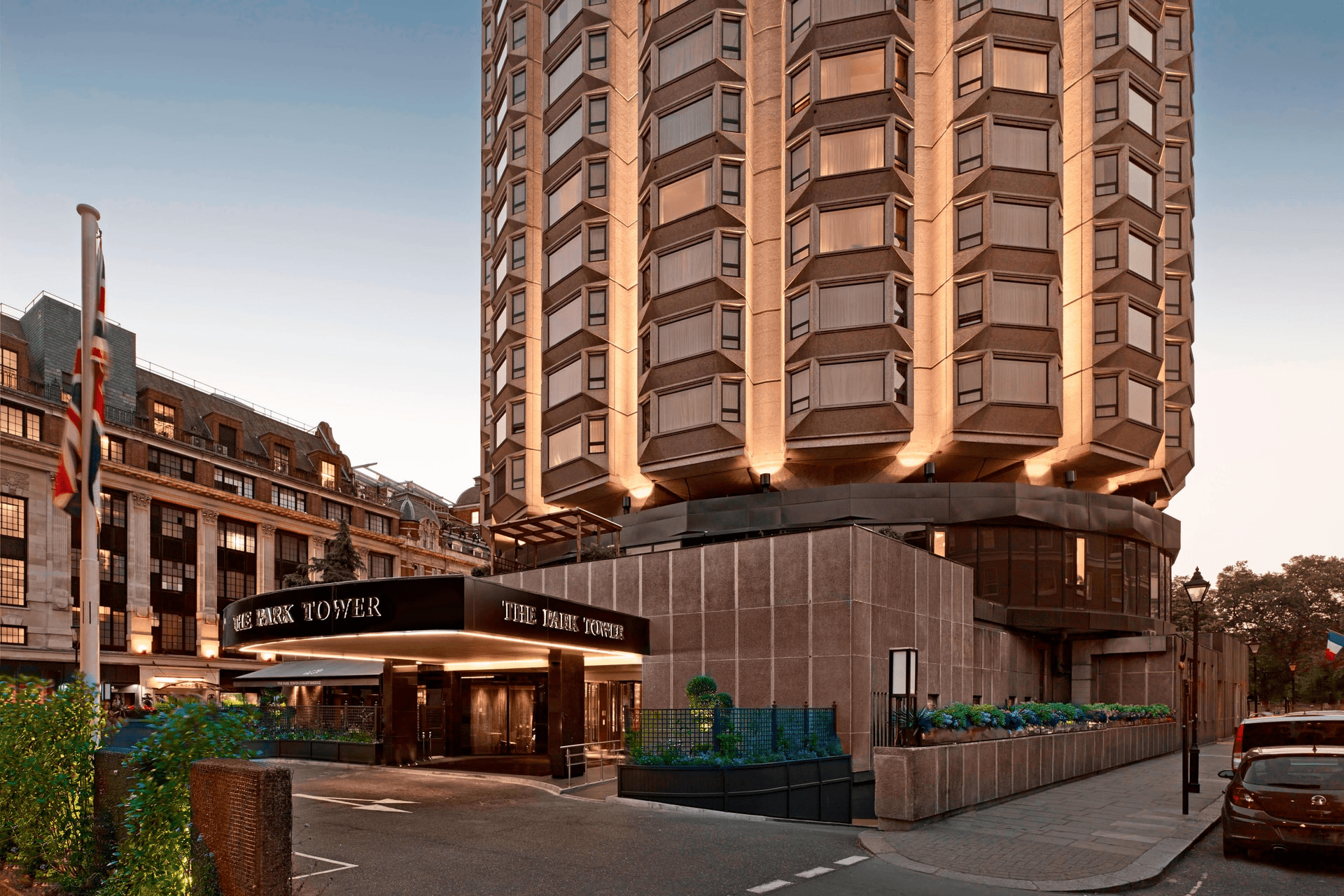
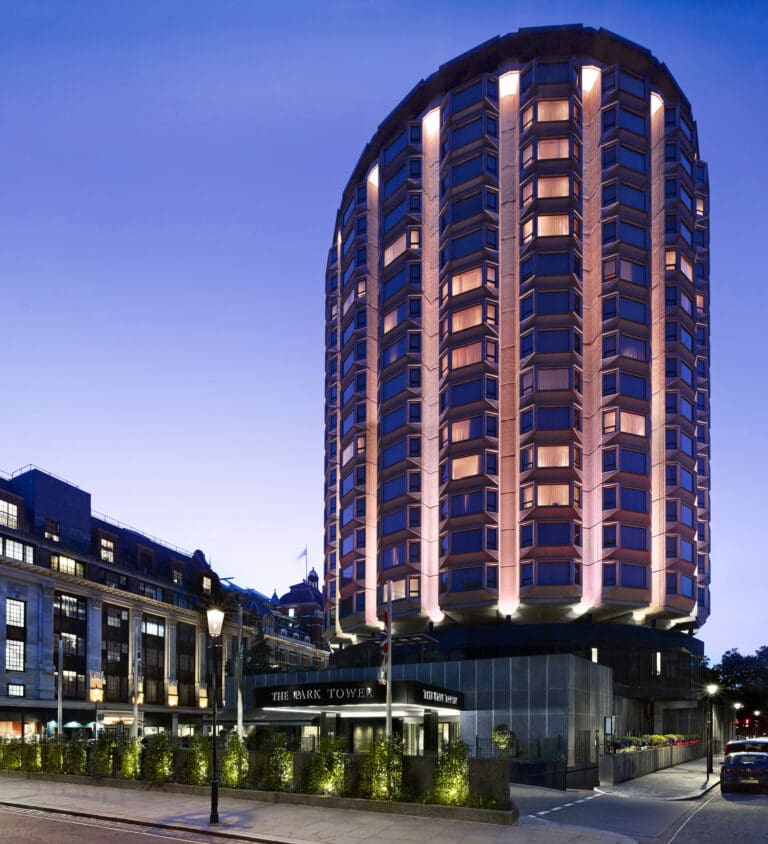
Veering more towards the Brutalist is the octagonal Park Tower built by “Colonel” Richard Seifert in 1973 and nicknamed “the Pineapple” by locals, owing to its circular design, spirally configured like the inflorescence of a tropical fruit. Seifert’s high rises in town – Centre Point at Tottenham Court Road and the 183m NatWest Tower in the City – caused controversy, but the response to his audacious 20th-century statement plonked amid Belgravia’s 19th-century grandeur was muted at first. However, decades on, the stubborn Pineapple is now regarded as a Brutalist gem. A transformative expansion and major renovation of the hotel’s street-level structure designed by Stanton Williams architects will be completed by 2029.
Discover the hotel for yourself during TRI Design festival with an exclusive one-day afternoon tea hosted alongside accessories brand Mocaro and its founder, renowned designer Monisha Robinson. Available on Saturday 14 March, the afternoon tea is inspired by Pantone’s Colour of the Year, “Cloud Dancer”, and guests will be able to meet the designer and leave with a luxury goodie bag. Find out more and book your place here.
On ground level, Nusr-ET may follow the familiar curves of the Pineapple but, inside, opulence comes in every measure, from a 72ft pendant track to veined marble tables. For lunch, visitors can enjoy a £39 special during TRI Design, including an appetiser, main course and dessert – perfect for a midday sushi roll.
A suite in Park Tower hotel’s upper floors provides handsome views of more prime Knightsbridge frontage. Mandarin Oriental Hyde Park, London was first conceived as an apartment block before being converted into a hotel in 1901. Swiss hotelier César Ritz was employed as a consultant, working with French architect Charles Mewès and Kensington-born Arthur Joseph Davis, who had all worked on the Ritz half a mile away on Piccadilly. The new “Hyde Park hotel” – once the tallest building in London – is built in red brick and Portland stone in a Franco-Flemish/Victorian Gothic Revival style.
The impact of hotel environments is one such topic being explored by design powerhouses Letitia Fitzgibbon,of Harrods Interior Design, and Vanessa Brady OBE, founder and CEO of the Society of British and International Interior Design (SBID). Taking place at Mandarin Oriental Hyde Park, London on 12 March, this conversation explores how brand reputation makes its way into private living areas from hotel shared spaces. Underground, plush Japanese izakaya restaurant and cocktail bar The Aubrey is offering 25% off each bill throughout March when quoting TRI Design Festival.
GOOD NEIGHBOURS
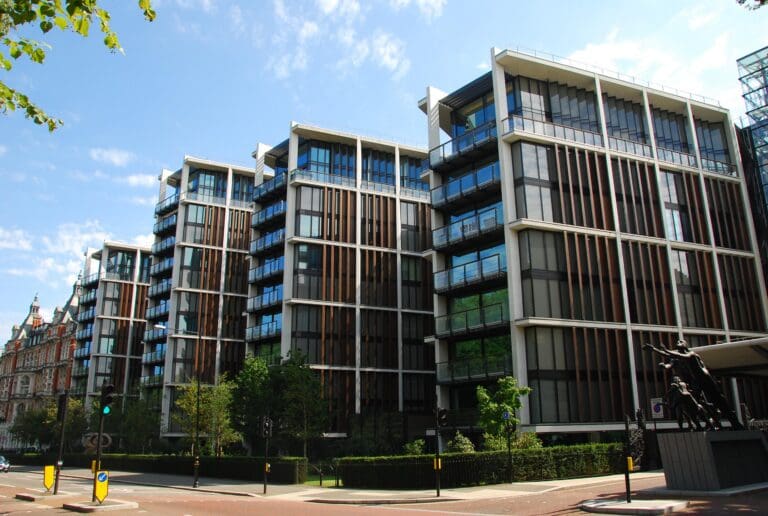
Next door, we’re very much back in the modern world – the copper-tinged, glass-and-steel, jet-set pavilions of One Hyde Park, another RSHP SW1 project. Like Paris’s Pompidou Centre, the Lloyds building, and the Millennium Dome before it, Richard Rogers’ luxury apartment block divided opinion when it opened in 2011. But no one could argue that it was a vast improvement on Bowater House, the drive-through carbuncle that the Candy brothers’ development replaced.
RETAIL THERAPY
And no venture along the Brompton Architecture Mile would be complete without a spot of retail therapy and a detour to its twin department-store titans.
Harvey Nichols at 109-125 Knightsbridge and Harrods at 87-135 Brompton Road are often pitched as rivals, but they actually share architectural style and provenance; both flagships were conceived by CW Stephens while enjoying an imperial phase as the smart postcode’s designer of choice at the turn of the century.
When he wasn’t constructing baronial mansions in Scotland and smart London hotels, the official architect to the Belgrave Estate Limited was busy establishing the Knightsbridge Grand Baroque Revival aesthetic. Known for his use of pinky-buff terracotta facings and exuberant detailing inspired by French Second Empire styles, Stephens was responsible for virtually all of the buildings in the immediate vicinity of Harrods and the whole of the neighbouring facade on Brompton Road, completed in 1905.
Across the way from Harrods – and far more modern in appearance – is Italian restaurant ALBA London, whose bar manager and mixologist, Marco Tilocca, has created an exclusive TRI Design cocktail menu, inspired by Pantone colour of the year “Cloud Dancer”, and the vibrant spring palette of Southern Italy. It’s available throughout the month of March, so there’s plenty of time to pop in for a leisurely catch up and drinks.
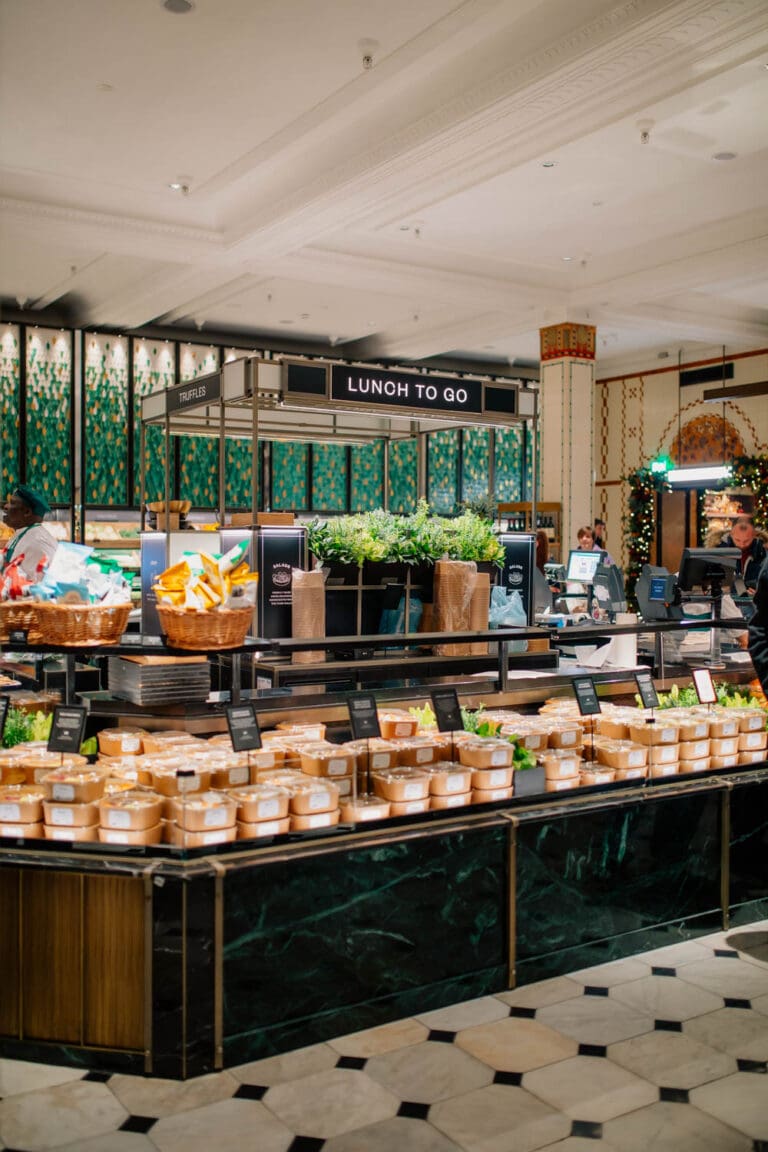
Back at Harrods, explore the perimeter to admire Charles Stephens’ seductive sequencing of bays, balustrades, grand entrances, curved balconies and turreted corners, then drop into the store’s lavish Food Halls for a posh takeaway or the sit-down options on offer in the renovated Dining Hall. Grand, civilised, elegant… and so very Knightsbridge.
TRI Design Festival takes place from 12-15 March 2026. For more details, visit tridesign.co.uk
Simon Mills is a journalist, writer, editor, author and brand consultant who has worked with magazines, newspapers and contract publishing for more than 25 years. He writes for The Times and is currently bespoke editor at Wallpaper* magazine
What else is happening